The term Femme Fatale is used to describe a lot of ancient archetypes, like Succubi (including Lilith) and Sirens, and Sorceresses like Circe, Medea and Morgan Le Fey. As well the reputations of some powerful historical women easily accused of gaining influence only through sex, Queens and Royal Mistresses and Concubines and Courtesans ect.
But the reason our default term for all of them today is a French term is because the transformation of the Femme Fatale into a modern Charismatic Supervillain is largely the work of French popular fiction of the 19th and early 20th Century. And I’ve decided to give my admittedly amateur analysis of how that happened.
Of course in the case of the Film Noir version that genre as a whole is affiliated with French terms. For that reason I’ll occasionally note works that anticipate the Film Noir in general but may not have a particularly notable Femme Fatale.
Now a few late 18th and early 19th century non French Examples are worthy of note in planting some seeds. Mainly any women who might qualify in the early Gothic Novels of Anne Radcliffe, Matthew Gregory Lewis and the Marquis deSade. Particularly Juliette and Matilda/Rosario. And possibly also Jane Austen’s Lady Susan.
This will include the development of the Femme Fatale Vampire as well, and as more than just a footnote. Just as the Byronic Vampire makes a great Supervillian when put into a contemporary setting, so too we shall see the Vampiress has been a vital transitional phase of the Femme Fatale from the mythological Succubus to a modern master criminal.
The first appearance of a Female Vampire among modern Vampire literature sparked by Polidori was in 1820 Cyprien Berard’s Lord Ruthwen ou Les Vampires, translated into English by Brian Stableford for BlackCoatPress as The Vampire Lord Ruthwen. But that character is not really a Seductress in-spite of some wanting to describe her that way, she’s described as more of an Anti-Vampire.
The first Femme Fatale Vampire would be 1825’s La Vampire ou la Vierge de Hongrie, translated into English by Brian Stableford for BlackCoatPress as The Virgin Vampire. Alinska’s basic look kind of anticipates Carmilla, with the Dark Hair and being noticeably pale but not enough to be obviously unnatural. The character is pretty complex, she anticipates later Femme Fatale vampires but is clearly less of one in comparison. It’s a very good novel, probably the first true Vampire novel in general in some ways.
On May 29th 1832 was the premier of a play whose authorship is a bit disputed between a young Alexandre Dumas and Frederic Gaillardet. It was called La Tour de Nesle and was based on a medieval French totally ahistorial urban legend about Marguerite of Burgundy. She has extramarital affairs and then kills her lovers to cover them up. It inspired a string of French melodramas about female serial killers. It’s relevance here is mainly to one Novel I’ll get to later.
In 1836 Theophile Gautier wrote La Morte Amoureuse, also known as Clairmonde. Clairmonde is probably the first Femme Fatale vampire as we’re used to thinking of them. And is about the only piece of 19th century French prose Vampire literature to have a near contemporary English translation, while most of the rest I shall talk about did not become available in English until Brian Stableford and BlackCoatPress came along. For that reason it might be easy to say this is the only one that could have been a direct influence on any later English works. But lots of indirect influences happen, and it wasn’t uncommon for educated Victorian Englishmen to know French.
In 1843-44 Alexandre Dumas’ The Three Musketeers was serialized. In it is who is often cited as the first modern Femme Fatale, Milady De Winter. She also anticipates the Femme Fatale spy. She is a very cunning and charming woman, but still lacks something in my view.
At the same time Eugene Sue was serializing The Mysteries of Paris. This is arguably the birth of the genre that would inevitably morph into the Film Noir, and other forms of Urban Crime fiction. But it lacks a really compelling Femme Fatale with the closest character being maybe Countess Sarah.
In 1845 Prosper Merimee wrote the novella Carmen which would later be the inspiration for the more well known Opera. It begins the problematic seductive Gypsy Temptress stereotype, or introduces it into literature at least.
In 1851 was Alexandre Dumas’ Le Vampire stage play, now translated faithfully into English by Frank Morlock, and can be bought along with an original story by Morlock about Alexandre Dumas himself fighting vampires in the BlackCoatPress volume The Return of Lord Ruthven. It features a female vampire though she is technically called La Ghoule and goes by the name Ziska. The lore of the play tells us that that Ghouls are typically Seductresses, but this one is actually the hero of the play having fallen in love with the protagonist.
Still her sensuous nature does come across, people who get annoyed at male leads choosing a boring Betty over the more interesting Veronica may be similarly annoyed here. Because Ziska is a very passionate woman while Antonia is basically an Ingenue.
Before 1851 was over it had inspired two English language Stage Plays. Boucicault’s removed the Ghoul entirely from his re-imagining. But Augustus Glossop Harris wrote a play that he presented as an equally original story but was really just an English Translation of Dumas’ play with a few rewrites. I have not been able to find the text of either play to read online however, what I know about them is thanks to Roxana Stuart's Stage Blood.
The changes made included adding Soliloquies, removing Melsuine further increasing Ziska’s role. And introducing the idea of using a Cross to ward off the Vampire. While earlier Vampire stories had found ways to make Christianity relevant to dealing with Vampires, this is as far as I know the introduction of the idea of the Cross warding them off. So this play in-spite of being critically panned was clearly influential, and perhaps looks closer to what a modern Vampire fan would expect then Dumas' original.
In 1852 Ponson du Terrail launched his career with La Barronne Trepassee, translated into English by Brian Stableford for BlackCoatPress as The Vampire and The Devil’s Son. This story is a very Anne Radcliffe style Gothic novel, but also quite surreal. It was clearly an attempt to further cash in on the Vampire craze that Dumas just started, but the artistic influences were more Clarimonde, Ann Radcliffe and possibly The Virgin Vampire. The Femme Fatale would be a recurring theme in Ponson’s career, but those he wrote outside his Vampire novels and the Rocambole saga I still lack direct knowledge of. Ponson also innovated a lot of tropes common in modern Romance novels, particularly historical romances.
In 1856 was serialized Paul Feval’s novel La Vampire, translated into English for BlackCoatPress as The Vampire Countess. That date is a bit disputed but I trust Stableford’s reasoning. This may not be the first Femme Fatal that Feval wrote, the majority of his output is still not available in English, and besides the fairy tale like short stories included in Anne of The Isles and maybe Revenants by a year or two, this is the earliest one that has been done by Brian Stableford. Most of the inevitably flawed Public Domain translations I haven’t taken the time to read yet, not quite all are online yet anyway. The Mysteries of London and Bel Demonio don’t seem to have any but those translations are abridged. Some may want to count Regina of Bel Demonio as one but I do not, she is a fascinating character for totally different reasons.
This novel is ambiguous about if any of the Supernatural aspects are real. And regardless of if the title character is really a Vampire the overall substance of the story is more an example of Paul Feval’s contributions to the development of Crime and political Espionage fiction. That combined with many aspects of her characterization I feel make Countess Marcian Gregoryi ultimately more relevant to the literary development of the human criminal Femme Fatale then the Vampire Femme Fatale. And she did quickly after I read the book become possibly my favorite.
If you’re someone who likes seeing the Femme Fatale victorious, then the interpretation where she is a vampire is the preferable one, she’s allowed agency in her end no other Feval villain had. But if you like seeing the desire to use a woman as an excuse for a male character’s sins deconstructed, then how Stableford explains the naturalistic interpretation is pretty interesting too.
In 1857 Ponson launched what would become known as the Rocambole saga with Les Drames de Paris: L’Heritage Mysterieux. There is an unabridged translation of this novel done by a relative of Ponson called Rocambole and The Mysterious Inheritance. I haven’t read that yet however, my familiarity with the Rocambole novels is through Basil Balian’s abridged translations done in three volumes. Rocambole Volume 1: The Dark Side, Rocambole Volume 2: Redemption and Rocambole Volume 3: Crusade. I have skipped volume 2 and read only 1 and 3, so I know the first 3 Rocambole novels (the third split into two books making up half of volume one), the last part of the Indian adventure which isn’t really set in India anymore, and the last 3 books all dealing with England. While these translations are abridged I don’t feel like I’ve missed anything besides a few quotes and anecdotal details mentioned on CoolFrenchComics.com one of which will be relevant later.
Baccarat has been called THE Femme Fatale of the Rocambole saga. To my perspective it’s only in the first book she’s even a disputable candidate to be one. After that she becomes the real Hero of the saga before Rocambole switches sides. And while I can count a Heroic character as a Femme Fatale, Baccarat is not what I would count as one at all.
The Baccarat whose reputation we often hear of as a Courtesan with a heart of Ice who many men tried to melt but none could, never appears in the story at all. When we meet her at the start of the story she’s already fallen in love with Fernand and has thus already begun her transformation.
Because Fernand is in love with the woman Sir Williams wants to marry to steal her inheritance, he proposes to help Baccarat obtain her desire. Her attempts to seduce Fernand are neither manipulative or successful. Her main sin is that it’s heavily implied she raped Fernand (he doesn’t know who she is until he wakes up naked in bed next to her, also naked). It’s who she is in the second and third novel that I feel make her a character Feminists would like. But forgiving her for that offense may be difficult for modern readers who are quite sensitive to Female on Male rape not being taken as seriously.
In the second Novel Le Clubs des Valets de Couer serialized in 1858. Baccarat is the real hero, someone else had to step up since Armand de Kergaz, the intended hero of the saga originally, has become utterly useless due to his blind desire to believe his brother’s claimed reformation. Baccarat is at first the only person who can see through Sir Williams.
And it is in this novel that we meet the best Femme Fatale that Ponson wrote, that I’ve been able to read at least, Turquoise. Her job is to seduce two men who survived the previous novel and manipulate them into killing each other. And it would have worked if not for that meddling Baccarat. CoolFrenchComics.com uses to say she was a Hypnotist, the abridged translation I read lacks any direct reference to that, but her seduction scenes do give off an Hypnotic vibe, I say that as a connoisseur of online Femdom Hypnosis erotica. I also feel stylistically like this character was influenced by The Vampire Countess, that may not have been a particularly successful Feval novel at the time, but Ponson would have been keeping track of everything Feval did as his main competition.
In the third Rocombole novel, Les Exploits de Rocambole, the Femme Fatale character is a never before mentioned sister of Baccarat, and even though they only share the same father she functions narratively 100% as an Identical Twin. She’s adequate, her possible main innovation is being an early Femme Fatale who’s also an evil twin/doppelganger of a more virtuous character, but I can’t be sure she’s the first since I haven’t read Dumas’ The Queen’s Necklace yet and so I’m uncertain if the Marie Antoinette doppelganger featured there I would consider a Femme Fatale at all.
Now we reach the second relevant Paul Feval character. In Jean Diable, translated into English by Brian Stableford for BlackCoatPress as John Devil (the English title is more accurate this time as the title character is the alias of an English criminal), we have the character who we are first introduced to as Sarah O’Neil. She is distinct from the other two Feval characters discussed here in that she doesn’t seem even quasi Supernatural. Her confidence in her ability to make men fall in love with her is much more realistic.
She kind of foreshadows the Film Noir Femme Fatale more then other examples discussed so far, particularly how the opening chapter mostly revolved around her walking into the detective’s office and sitting in front of his desk and giving him very specific information. She’s also Henri Belcamp’s only accomplice in on the entirety of his plan.
In 1965 Paul Feval wrote the second novel of his Les Habits Noirs series, Couer d’Acier, translated into English by Brian Stableford for BlackCoatPress as The Blackcoats: Heart of Steel. This novel formally introduced Marguerite Sadoulas, who is the principal antagonist in this novel. She is identified with the unnamed woman who was disguised as a Nun while The Colonel was on his Deathbed in the first Novel. Thematically the story takes inspiration from La Tour de Nesle, but this Marguerite becomes her own distinctive character and ultimately a superior one.
She is besides maybe The Vampire Countess the most powerful and effective Femme Fatale Feval wrote, and perhaps of any in 19th century literature. Her similarities to that character aren’t a coincidence, and I think by more than just being the product of the same author. I suspect Feval was intentionally trying to rework the version of that character who was a mere human. Based on her sometimes seemingly supernatural ability to manipulate men, as well as Greed and Avarice being her real motivations. (There would be major flaws however in any desire to compare her relationship with Lecoq to Addhema’s with Szandor). And the name Marguerite happens to appear in the first chapter of La Vampire when discussing Faust.
Marguerite is a rare example of a Femme Fatale who never falls into the trap of falling for her victim. Nor does she ever turn good like many other only female members of a group of villains tend to do.
She right from this first novel shows that there is more to her as villain then just being a Seductress. She becomes the leader of the Blackcoats as a whole after the demise of Lecoq. But even more so in that she appears to varying degrees of importance in 4 of the 5 following Les Habits Noirs novels. In those the Femme Fatale factor of her character rarely if ever comes up. Indeed as someone who read the books out of publication order (not exactly BCP’s publication order either), Heart of Steel was the last that I completed (which is all but one). I was before I got to Heart of Steel uncertain if she’d even qualify as a Femme Fatale, I’d seen her described as one (like on TVtropes, that example isn’t one of the ones I added), but as alluded to I feel some female characters are described that way inaccurately. Cadet Gang I can’t fully speak to since I haven’t finished it, that one is below the quality of the rest.
In Salem Street she’s just a supporting character, and in The Invisible Weapon she has only one scene. But she is important to The Companions of The Treasure. In the first half her gender is relevant only in that she posed for a painting as Venus. But her only scene in the novel that could be described as a seduction scene is the one with Irene in the second half. Indeed it seems in the second half of that novel her role is arguably the role Feval would have given Lecoq if it were as plausible to resurrect him post 1842. It’s largely with the help of this that she to me easily surpasses Lecoq and becomes the real number two villain of the saga.
In 1867 Ponson finished Le Dernier Mot de Rocambole. It is only the last part of this novel I’ve read, it features a character called The Beautiful Gardiner, this character is unfortunately another example of the Gypsy Temptress stereotype, in fact there are many reasons this volume is probably the most Racist Rocambole novel. She also has a fetish for plants and uses them in her schemes. For that reason she perhaps anticipates Poison Ivy, but her motivations are not at all the same, no Eco-Terrorism here.
In 1867-68 Ponson serialized Les Miseres de Londres, the seventh Rocambole novel and perhaps the most distinct as it lacks any prior recurring characters of the saga besides Rocambole himself. Rocambole becomes involved with Irish revolutionaries. The main villains in terms of rank are Reverend Peters Town aka Patterson, whom the abridged Translation calls Bishop Towne and Lord Palmure. But it is in fact Ellen Palmure who is the most active antagonist and the only one who can match wits with Rocambole, and she plans to Seduce him. She is the best character of this book by far.
The problem is in the following books after she changes sides from falling in love with Rocambole she becomes one of many female characters who seem to lose their cunning and ingenuity once they turn good. The falling in love with Rocambole itself may come off contrived, but it’s a Rocambolesque melodrama, I could forgive that if she remained as formidable a character as she was as a villain.
In 1869 Ponson wrote La Femme Immortelle, translated by Brian Stableford for BlackCoatPress as The Immortal Woman. This is his other Vampire novel with a female vampire. I haven’t finished it yet and don’t have much to comment on, besides that the story involved Alchemy.
In 1872 Sheridan LeFanu published In A Glass Darkly which included the novella Carmilla. Besides translations from other languages Carmilla would be the first Femme Fatale Vampire in English literature, there were prior female Vampires like Clara Crompton from the Varney the Vampire saga, but she wasn’t much of a seductress. That the novel is indebted to French influences is possibly homaged by having one of the Governesses be French.
The name Carmilla is explained in universe as an anagram of Mircalla (a much more plausible Austrian name). I suspect that the Meta origin of the name is combining Carmen (mentioned above) with Camilla of the Aeneid, whose relationship to Diana has been speculated to be a Lesbian one, like Artemis with many of her Maiden companions. Combing a Femme Fatale name with a Lesbian name.
On March 3 1875 premiered the Opera version of Carmen.
In the first decade of the 20th century the Arsene Lupin stories of Maurice Leblanc began being published. A number of characters who could be described as Femme Fatales appear in the Lupin stories, though not all appear in the earliest ones. My Lupin knowledge is admittedly very limited still, I’ve directly read only two novels and a few of the early short stories.
813 is also another good novel to mention as a prototype of the Film Noir in general even if it lacks a Femme Fatale (I haven't read it yet). It was originally written in 1910, but Leblanc later rewrote it for a new edition in 1917, following the example of Mary Shelley and anticipating Tolkien’s rewriting of The Hobbit and George Lucas updating of the original Star Wars trilogy. It is this updated version that is the basis for Jean-Marc & Randy Lofficer’s English translation done recently for Black Coat Press, and is the reason the CoolFrenchComics.com Lupin Timeline dates the events of the Novel later then when it was first written.
The 19teens also saw an increase in Femme Fatale presence in Silent films in both America and France, like A Fool There Was. James Rolfe’s video on lost Horror films mentions how many films with Vampire in the name came out in this decade. The one that involved a snake woman sounds like it was actually based on the Lamia of Greek mythology.
But one Silent project of this period with Vampire in the name not lost is the 1915-1916 French silent serial Les Vampires, which features the proto-Catwoman character of Irma Vep, the first known example of a villainess wearing a skin tight catsuit, though it’s only in one scene. It was not a supernatural story at all but a Crime Saga. The director made this project after losing the rights to Fantomas. But I feel it’s highly likely this was also influenced by Paul Feval.
The same actress who played Irma Vep, Musidora, went on to appear in the director’s next serial Judex in 1916-17 as another villainess known as Diana Monti aka Marie Verdier. Judex had a sequel but that serial is lost, the novelizations of both have been translated into English for Black Coat Press by Rick Lai. The sequel featured another villainess played by a different actress but seemingly playing a similar role, this one has been described as also wearing a skin tight catsuit, perhaps the second known example.
The years 1910 and 1917 also featured Silent shorts called La Femme Fatale. There was later a 1946 film made with that title.
In February of 1919 Berie Benoit published L’Atlantide, a novel about a Queen of Atlantis descended from Anthony and Cleopatra named Antinea. Benoit was unfairly accused of plagiarizing She, CoolFrenchComics has a page explaining why that wasn’t the case. Antinea went on to be subject to more film adaptations then She, even specifically English Language films. Antinea and She were both clearly a major influence on many Femme Fatale Evil Queens of the Fantasy (and sometimes SciFi) Genre.
In 1920 was written the first Bulldog Drummond novel by H.C. McNeilie. The Femme Fatale of this saga was Irma Peterson, wife of the original villain Carl Peterson. Her name is clearly evidence of being partly inspired by Irma Vep. She takes over as the main villain in 1928. She could very well be the first true Pulp Style Femme Fatale in the English Language.
The 1923 silent film version of The Ten Commandments directed by Cecil B DeMille is not what you’d expect, unlike the now more famous remake from the same director the depiction of the Exodus is only an extended prologue, most of the film is set in the then present. It features a Femme Fatale character played by Nita Naldi referred to as The Eurasian, specifically she seems to be defined as half Chinese and half French.
In 1924 was published the Lupin novel La Comtesse de Cagliostro. An early English translation was made called Memoirs of Arsene Lupin, but it was very flawed, I read and recommend Jean Marc & Randy Lofficer’s Arsene Lupin vs Countess Cagliostro, published by Black Coat Press, which includes two Lupin novels. This Novel is a prequel, depicting Lupin’s origin story. The title character also called Josephine Balsamo, is distinct from other Lupin characters who could be called Femme Fatales, her ambiguous Supernatural qualities make her I feel very Feval and Ponson influenced, but with Lore based on Dumas version of Count Cagliostro. She is definitely one of the best Femme Fatales ever created.
During both the later Silent and early sound era Anna May Wong played a lot of Exotic Femme Fatales. She was also very unhappy about being repeatedly typecast in that role. Still she was very good at them. Two of them were very 1001 Arabian Nights inspired works, and so a likely influence of Galland is there. One was a Fu Manchu based film, Sax Romer was no doubt influenced by French Novels.
Even though Arsene Lupin has somewhat fell into obscurity in the English speaking world he was very influential particularly on early pulp writers. Walter B Gibson had admitted to Arsene Lupin being a major influence on The Shadow.
I should also note that the Flash Gordon and Buck Rogers style space operas that inspired Star Wars were largely about putting the conventions of Swashbuckling adventures in space, the genre codified by The Three Musketeers, so Femme Fatales in those may have been influenced by Milady as well as Antinea.
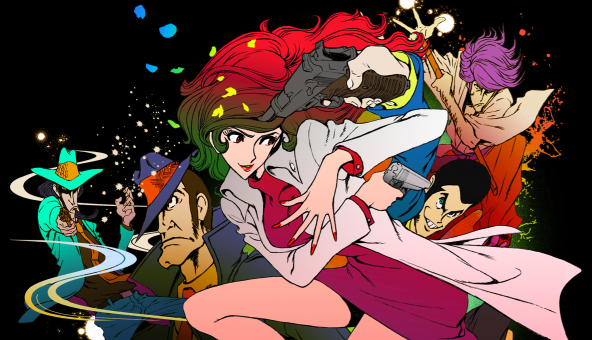
In Japan, Fujiko Mine is often thought of as the definitive Femme Fatale. She is part of the Lupin III aka Lupin The Third franchise, directly derivative of Arsene Lupin. I’m not sure which of the women in the original Lupin stories makes the most likely prototype, but I think Countess Cagliostro is the least comparable, Fujiko is like Lupin himself an Anti-Hero, Josephine Balsamo is Evil. It’s also reasonable to speculate Lupin III’s creators were influenced by other French works too, not just Lupin.
La Demoiselle aux yeux verts published in 1927 (literally translates as The Damsel with the Green Eyes) is interesting in that it had an English translation called Arsene Lupin Super Sleuth, but it’s long out of print and hard to find. But searching on Amazon it seemed much easier to find in both Japanese and Korean. And from what I’ve read about it there are possibly two characters in this novel who make possible Fujiko Mine prototypes.
The late 1920s and early 1930s is when the various genres of Pulp Novels start taking off in America, including the Hard Boiled Detective characters of Dashiell Hammett and Raymond Chandler, that helped directly inspire the Film Noir genre.
Another Arsene Lupin novel whose title hints at a Femme Fatale possibly being involved is 1933’s The Woman with Two Smiles. But I don’t know anything about it.
In 1934 was released a remake of Judex that I would assume was a talkie but I can’t find much info on it. Diana Monti was played by Blanche Bernis.
The other Lupin novel published in Arsene Lupin vs Countess Cagliostro and thus the other one I’ve read is 1935’s La Cagliostro se Venge or The Revenge of Cagliostro. Countess Cagliostro doesn’t appear in it however, it’s set about when La Comtesse de Cagliostro was written and features Lupin being informed she died several years earlier. The Novel happens to seem unlike other Lupin stories a lot like the early Hard Boiled Detective novels that had become popular in America. It does have a character who could be called a Femme Fatale of sorts, Faustine.
1936 is probably the first Film or at least Talkie appearance of the Vampire Femme Fatale in Dracula’s Daughter. The Novel was inspired by Bram Stoker’s Dracula's Guest which was published as a short story but is really a deleted early chapter. That was in turn a homage to Carmilla, but since Dracula's Daughter unlike Dracula’s Guest has some Lesbian action, it’s safe to assume the filmmakers were also familiar with Carmilla directly.
Also in 1936 an unidentified author using the pen name Lars Anderson created The Domino Lady arguably both the first and best example of a heroic Femme Fatale (that may be subject to adjustment once I become more familiar with Arsene Lupin’s adventures). We have no way of knowing how much this author was influenced by French stories.
In 1941 the Film Noir genre kicks off with The Maltese Falcon, starring Bogart, which was actually the third adaptation of that novel.
In 1943 Son of Dracula was released, arguably the second appearance of a Vampire Femme Fatale on Screen, with Louse Allbritton’s character as the Femme Fatale. The plot has been compared to being like a Film Noir with Vampires, specifically the Double Indemnity/Postman Always Rings Twice formula. But it predates both of those films and the source material for the former. It is possibly the first Vampire film or story in any medium to feature a human character intentionally seeking to become a Vampire.
The Film Noir continued to thrive till near the end of the 1950s.
In 1963 another remake of Judex was made. This one I’ve seen, it’s one of the few CoolFrenchComics.com relevant French Films to be available with English Subtitles. It also clearly homages Les Vampires by having Diana Monti (Francine Berge) wear a skintight black catsuit. It should be noted that Catwoman did not really start regularly wearing a catsuit till Julie Newmar in 1966. This film also predates Marvel’s Black Widow.
A 1974 film from the same director called Nuits Rouges aka Shadowmen would also feature a villainess in a skin tight catsuit.